
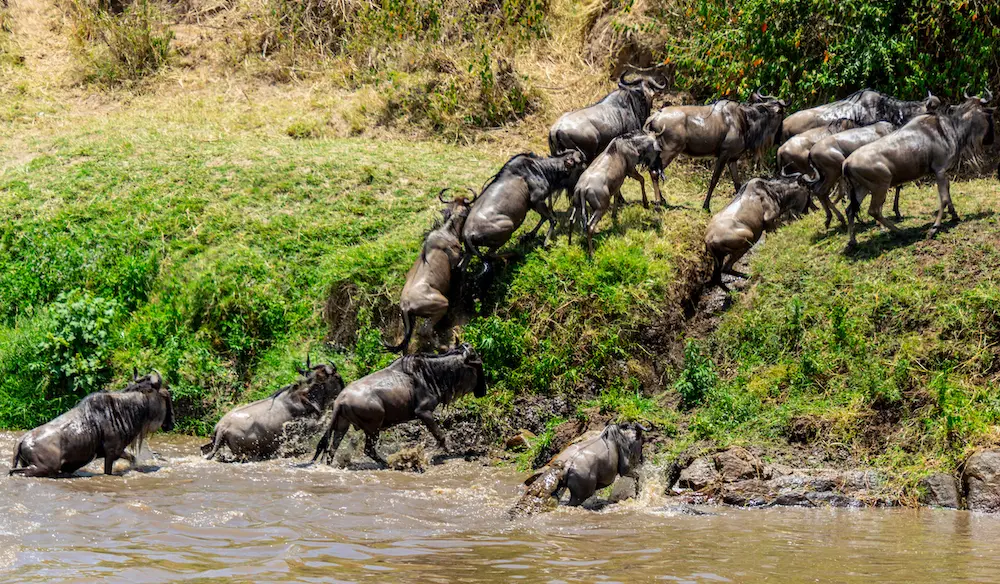
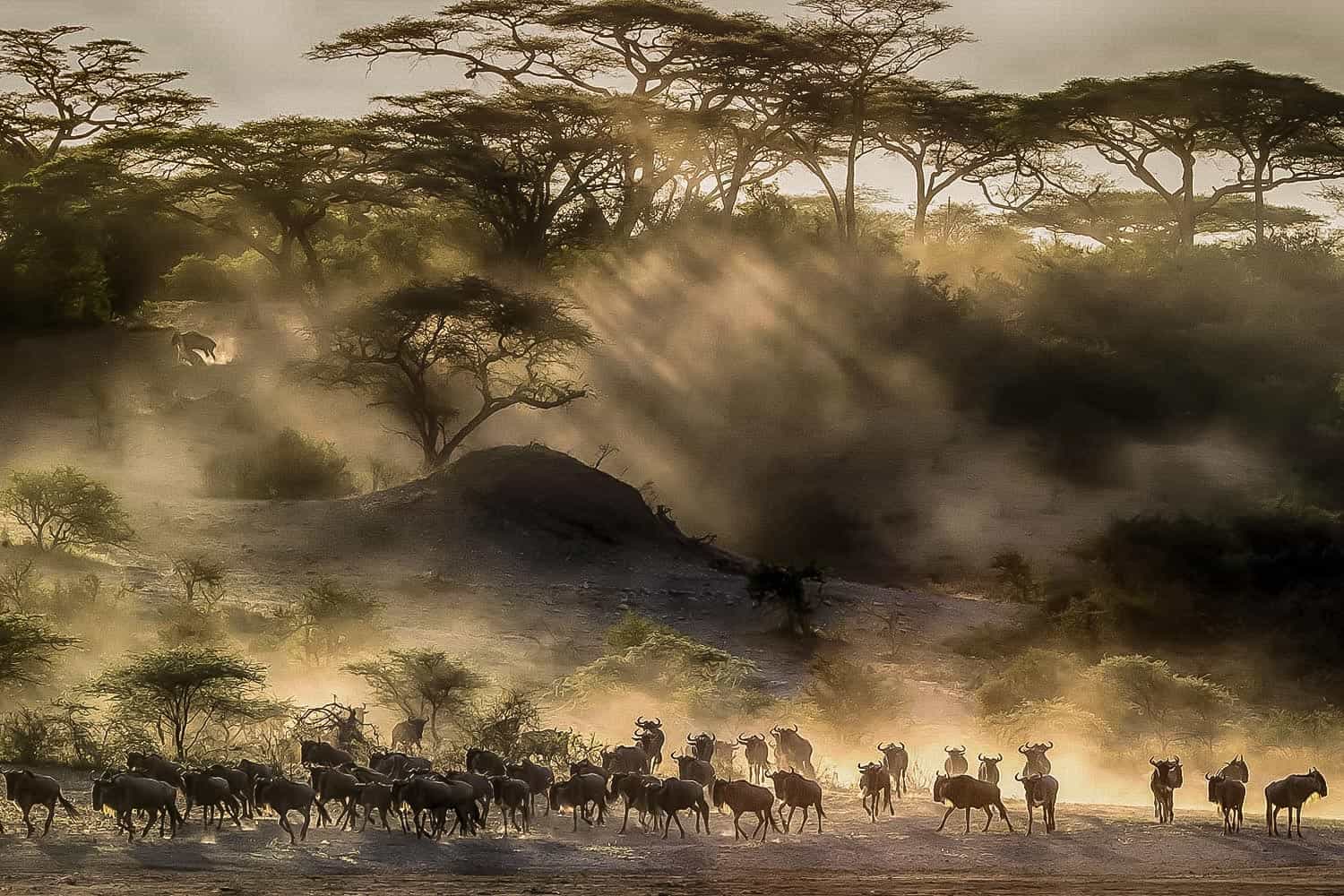
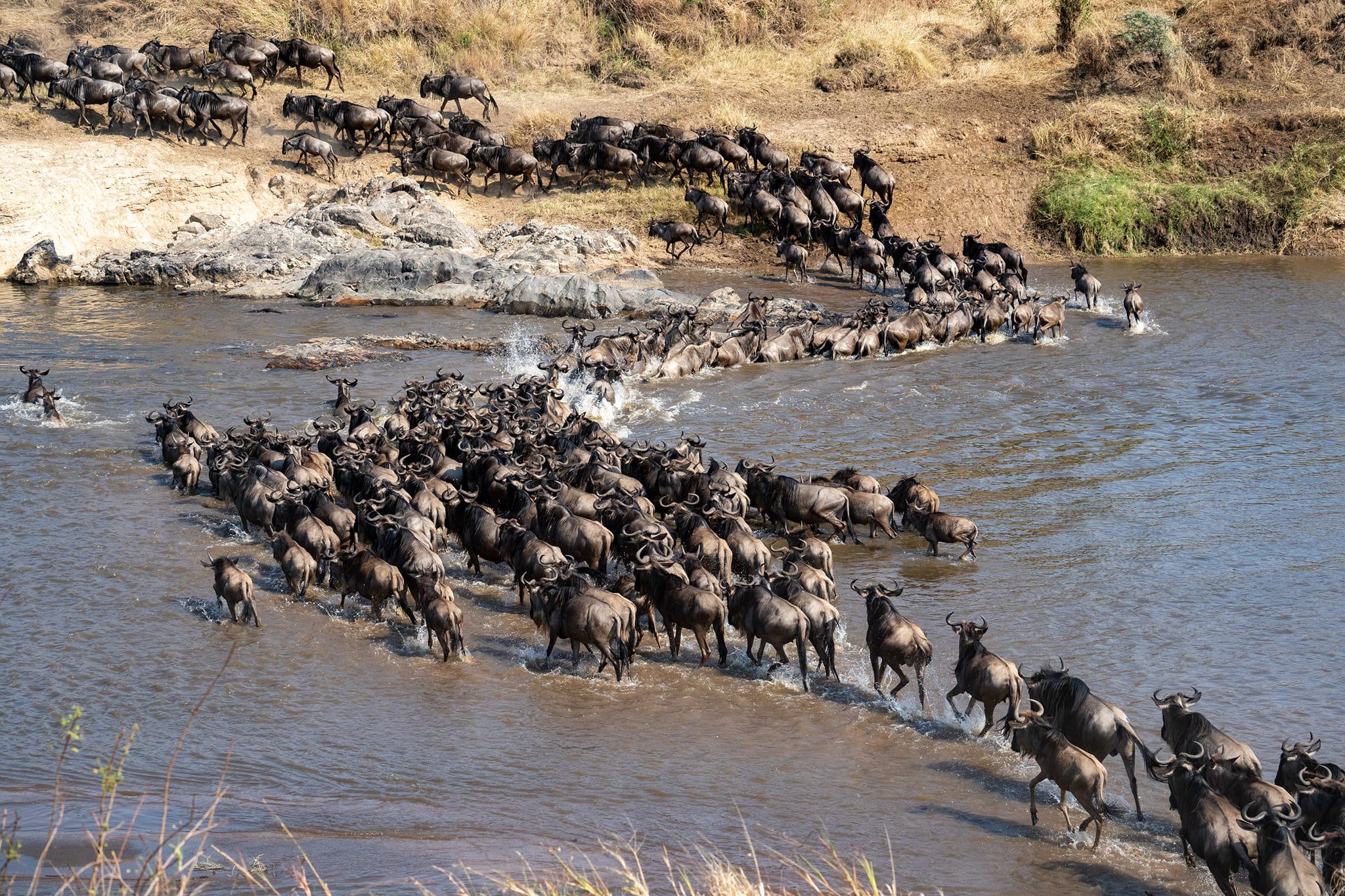
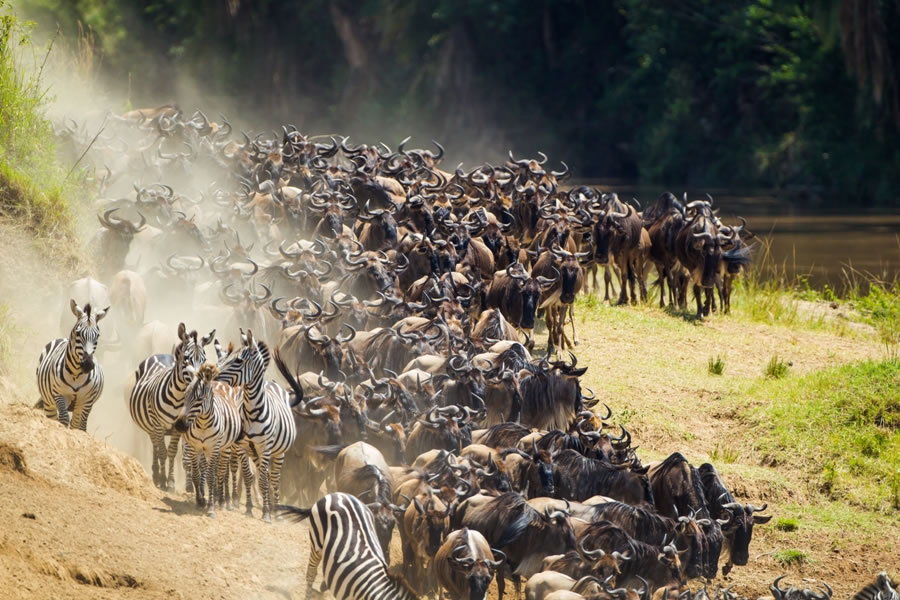
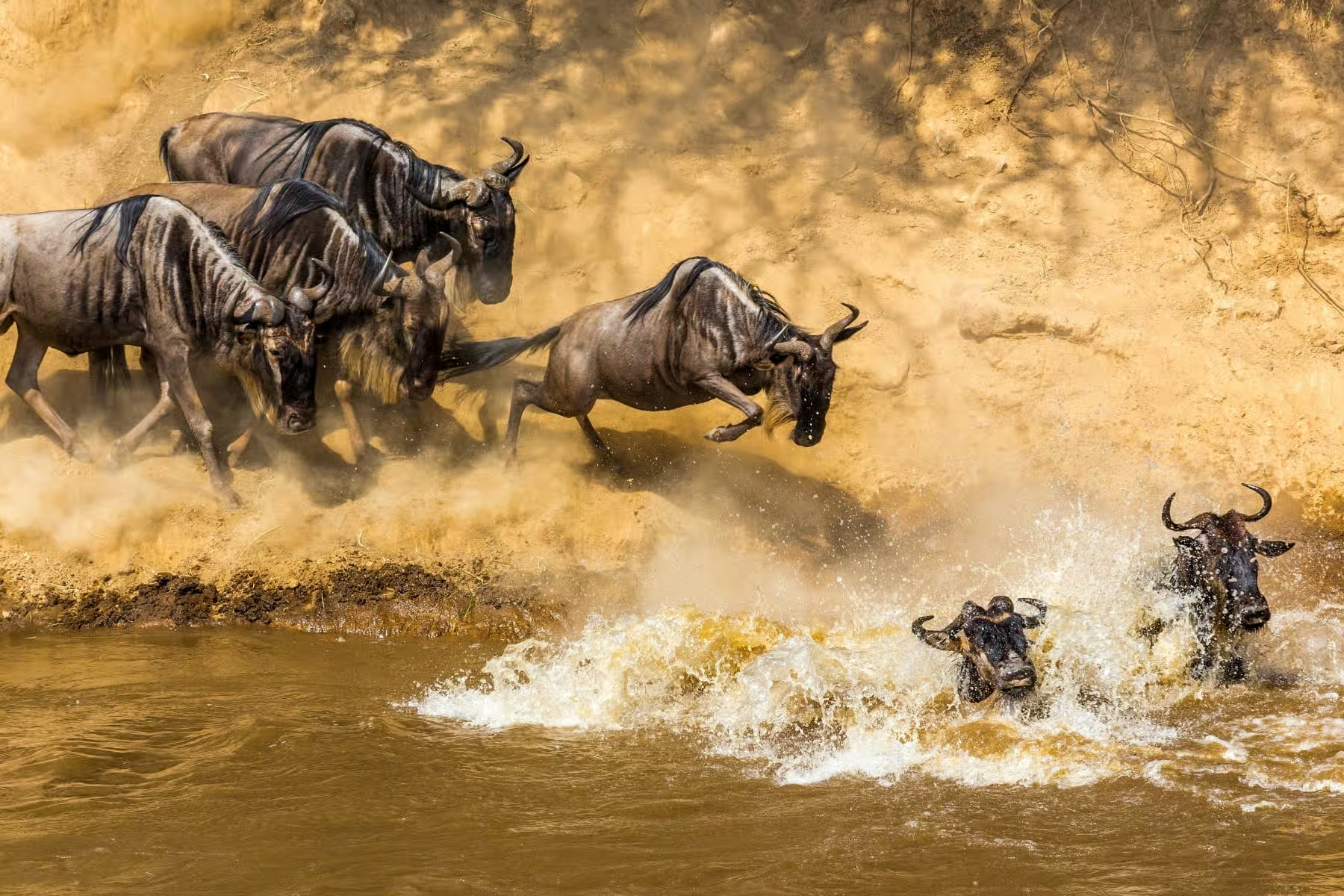
Each year, almost two million wildebeest and 20 000 plains game migrate from Tanzania’s Serengeti to the south of Kenya’s Masai Mara in search of lush grazing grounds and life-giving water. This treacherous migration is dictated by the seasons and where the rains are, the wildebeest are not far behind. This epic journey from north to south spans almost 3000 kilometres and is virtually endless.
This great spectacle of nature is an iconic safari option for avid travellers, nature lovers and those who want a little more from their African experience.Rather than having a start or end point, the Great Migration moves rhythmically in a clockwise direction, making herd tracking unpredictable. It is for this reason that our Herdtracker app was created; to help you track the wildebeests’ movements and plan the safari of a lifetime. Choose from our existing safari packages or tailor-make your own journey according to your budget.
The Great Wildebeest Migration – the annual migration of giant herds of grazers across Northern Tanzania and Kenya is a truly spectacular event. Over two million wildebeest, zebras and gazelles move through the Serengeti and Masai Mara ecosystems in search of green pasture, in a regular pattern. This is surely one of the greatest wonders of the natural world.
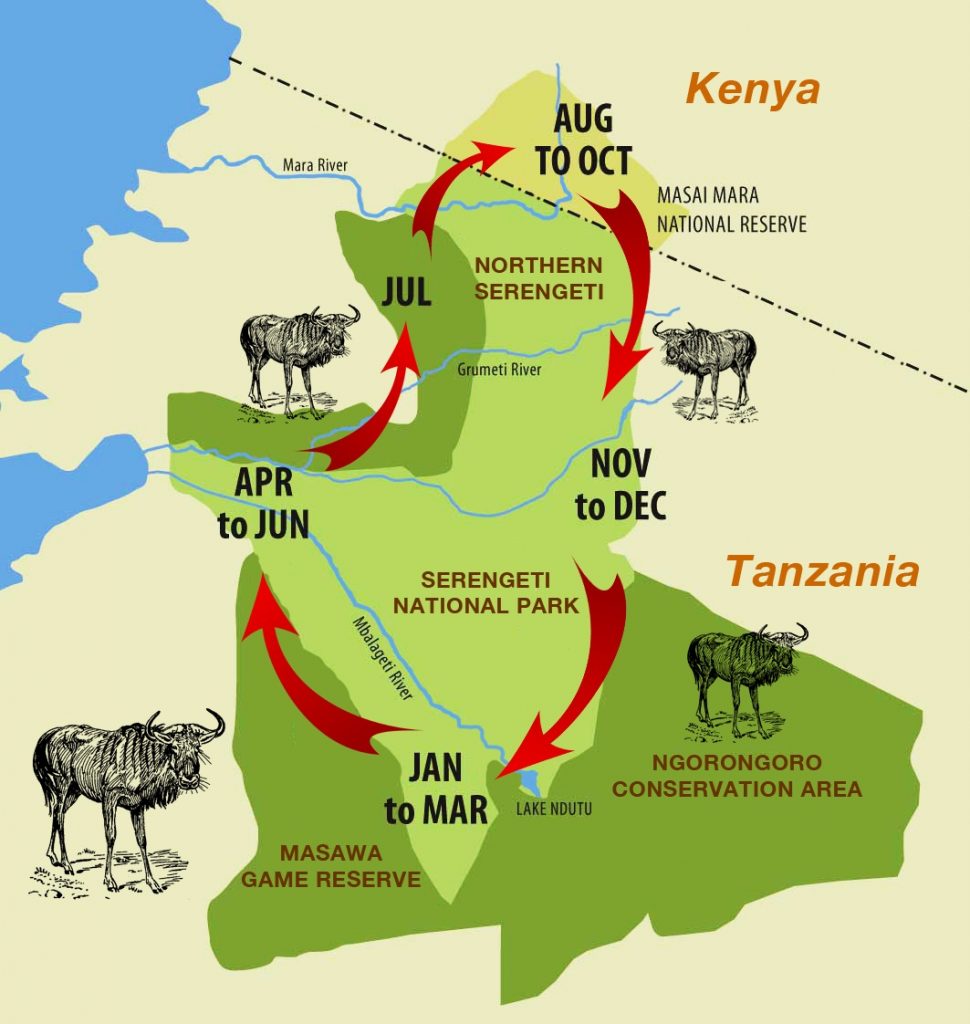
You can see the Great Migration in Tanzania all year round – they migrate in a circular motion around the Serengeti National Park as such it is an ongoing event. Below we will dissect where the wildebeest usually are at different times of the year.
Wildebeest, also called gnus, are members of the antelope family. They are related to oryxes and gazelles. A wildebeest can grow to 2.4 meters (8 feet) in length, and weigh up to 270 kilograms (600 pounds). Wildebeest typically inhabit the Serengeti plains of southeastern Africa. For most of their lives, wildebeest graze in the grassy savannas and open woodlands of the plains, which straddle the nations of Tanzania and Kenya.
The wildebeest migrate around the Serengeti, and into the Masai Mara for the sole purpose of following the rainfall. For their calving from December – March they always begin their cycle in the Southern Serengeti area of Ndutu and follow wherever the grass is greener.
Whilst we have a good idea of where the wildebeest should be at any given time of year, it really does depend on where the rain falls.
The wildebeest are notoriously unreliable, as although they generally all head from south to north Serengeti. Again, they often zig-zag along the way, making it sometimes impossible to predict where the big herds will be at any given time.