
Masai Mara National Reserve
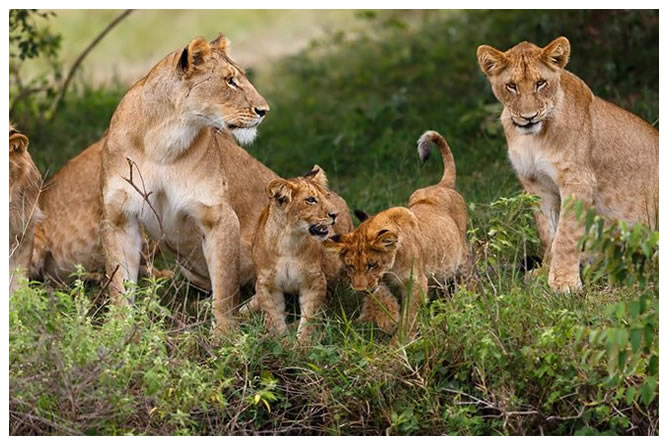 Maasai Mara National Reserve, located in southwestern Kenya along the border with Tanzania, is one of Africa’s most celebrated wildlife destinations. Covering about 1,510 square kilometers, the reserve forms the northern extension of Tanzania’s Serengeti ecosystem and plays a vital role in regional conservation. It is named after the Maasai people, the area’s traditional inhabitants, and the Mara River, which flows through the reserve and sustains its rich wildlife.
The Maasai Mara is world-famous for the Great Migration, one of nature’s most spectacular events. Each year, between July and October, over 1.5 million wildebeest, accompanied by hundreds of thousands of zebras and gazelles, cross from the Serengeti into the Mara in search of fresh grazing. Dramatic river crossings, where herds brave crocodile-filled waters, are among the most iconic wildlife scenes on Earth.
The reserve is home to an extraordinary concentration of wildlife year-round, including the “Big Five” — lion, leopard, elephant, buffalo, and rhino. It is particularly renowned for its large lion prides and high density of predators such as cheetahs and hyenas. The open savannah grasslands, dotted with acacia trees and intersected by rivers and rolling hills, provide ideal conditions for game viewing and photography.
Beyond wildlife, the Maasai Mara offers rich cultural experiences. Visitors can engage with Maasai communities to learn about their traditions, pastoral lifestyle, and deep connection to the land. Tourism plays a significant role in supporting local livelihoods and conservation initiatives.
With its breathtaking scenery, remarkable biodiversity, and world-class safari lodges and camps, Maasai Mara National Reserve remains a premier destination for unforgettable African safari experiences.

Samburu National Reserve
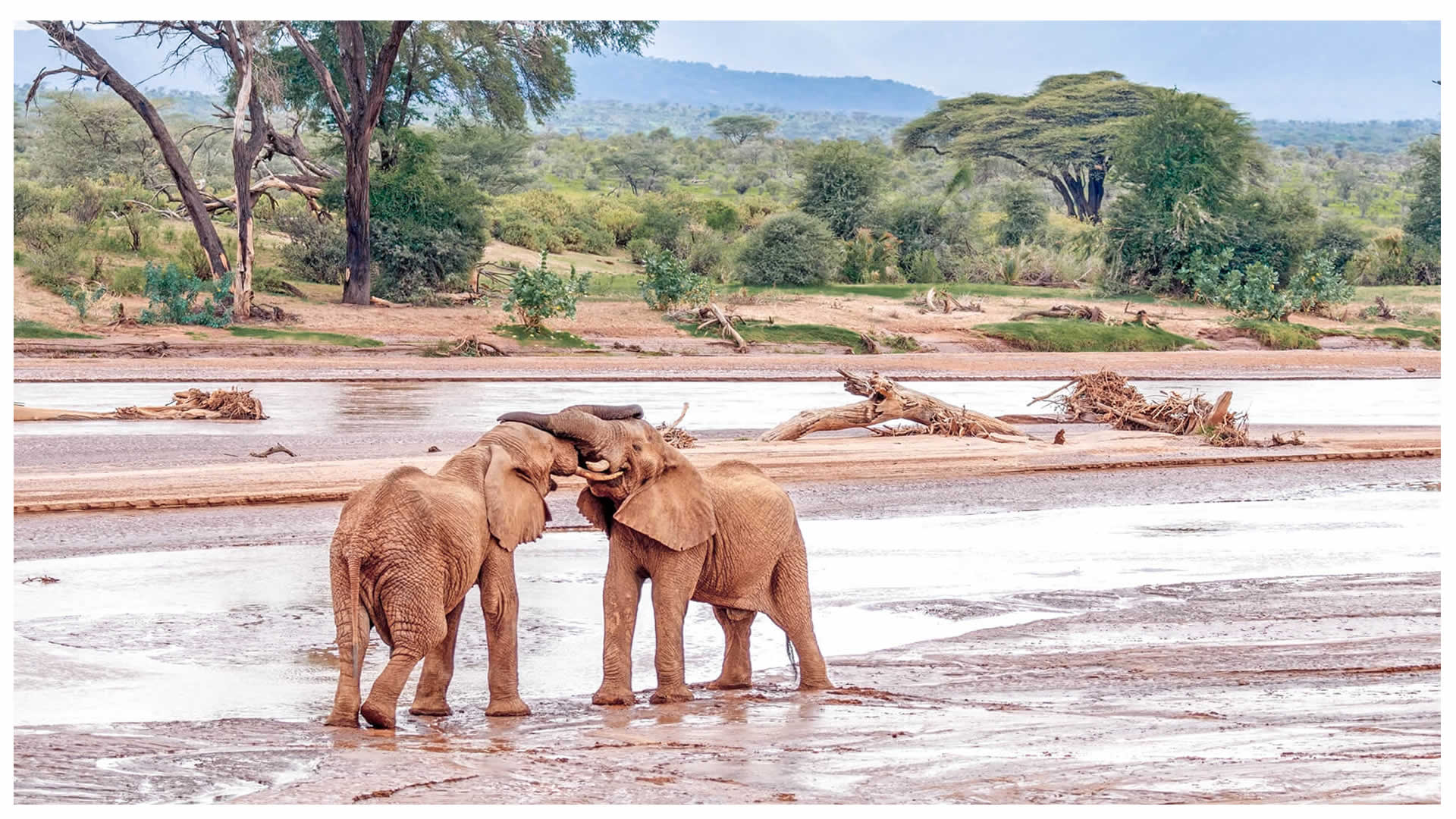 Samburu National Reserve is a striking wildlife sanctuary located in northern Kenya along the banks of the Ewaso Ng’iro River. Covering approximately 165 square kilometers, the reserve lies in a semi-arid region characterized by rugged hills, acacia woodlands, riverine forests, and open savannah. Its dramatic landscapes and unique wildlife make it one of Kenya’s most distinctive safari destinations.
The life-giving Ewaso Ng’iro River attracts a wide variety of animals, especially during the dry season when wildlife gathers along its banks. Samburu is particularly famous for the “Samburu Special Five” — species rarely found in southern Kenya’s parks. These include the Grevy’s zebra, reticulated giraffe, Somali ostrich, gerenuk (known for standing on its hind legs to browse), and the beisa oryx. The reserve also hosts elephants, lions, leopards, cheetahs, African wild dogs, and large crocodiles in the river.
Birdlife is abundant, with over 450 recorded species, including kingfishers, bee-eaters, vultures, and martial eagles. The reserve’s relatively low visitor numbers compared to more famous parks like Maasai Mara offer a quieter and more exclusive safari experience.
Samburu is home to the Samburu people, close relatives of the Maasai, who maintain strong pastoral traditions and vibrant cultural practices. Community conservancies surrounding the reserve play a key role in wildlife conservation and sustainable tourism.
With its unique species, scenic beauty, and cultural richness, Samburu National Reserve offers an authentic and less crowded alternative to Kenya’s more southern safari circuits.
Tsavo East National Park
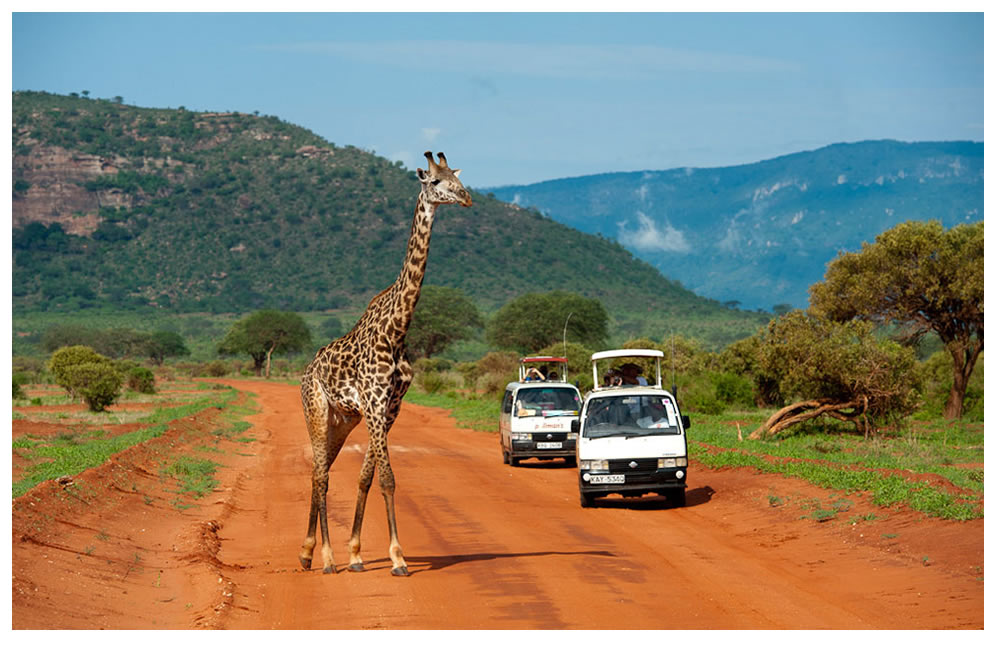 Tsavo East National Park is one of Kenya’s largest and oldest national parks, covering approximately 13,747 square kilometers in the country’s southeastern region. Established in 1948, it forms part of the greater Tsavo ecosystem, which is divided into Tsavo East and Tsavo West by the Nairobi–Mombasa highway. Tsavo East is known for its vast open plains, semi-arid landscapes, and untamed wilderness, offering visitors a true sense of Africa’s raw beauty.
The park is famous for its large herds of “red elephants,” so called because they dust themselves with the park’s distinctive red volcanic soil. Tsavo East is also home to lions, leopards, cheetahs, buffalo, giraffes, zebras, and numerous antelope species. The Galana River, which flows through the park, supports hippos and crocodiles and attracts a wide range of wildlife, especially during the dry season.
One of the park’s most notable features is the Yatta Plateau, one of the world’s longest lava flows, stretching over 290 kilometers. Other attractions include the Lugard Falls on the Galana River and the Mudanda Rock, a natural water catchment area that draws elephants and other animals.
Tsavo East’s expansive terrain and relatively low visitor density create a tranquil safari experience compared to more crowded parks. Its dramatic landscapes, rich biodiversity, and historical significance — including the legend of the “Man-Eaters of Tsavo” — make it a compelling destination for nature lovers and adventure seekers alike.
Tsavo West National Park
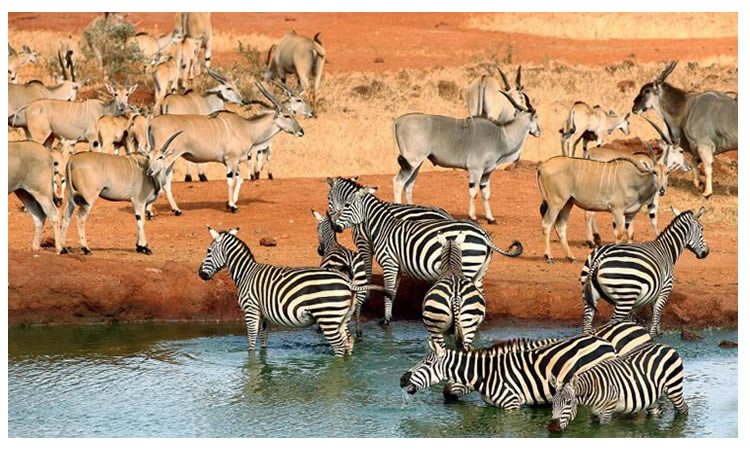 Tsavo West National Park, located in southeastern Kenya, covers approximately 9,065 square kilometers and forms part of the vast Tsavo ecosystem alongside Tsavo East. Established in 1948, the park is renowned for its dramatic scenery, diverse habitats, and rich wildlife. Compared to Tsavo East’s open plains, Tsavo West features rugged hills, volcanic cones, lava flows, natural springs, and dense vegetation, creating a more varied and scenic landscape.
One of the park’s most famous attractions is Mzima Springs, where crystal-clear water flows from underground streams originating from the Chyulu Hills. The springs attract hippos, crocodiles, fish, and numerous bird species, and visitors can observe wildlife from an underwater viewing chamber. The Shetani Lava Flow, formed by volcanic activity only a few hundred years ago, adds to the park’s striking geological features.
Tsavo West is home to the “Big Five” — lion, leopard, elephant, buffalo, and rhino — with the Ngulia Rhino Sanctuary playing a key role in protecting the endangered black rhinoceros. The park also supports cheetahs, giraffes, zebras, antelopes, and a wide variety of birdlife, with over 600 recorded species.
The park offers spectacular views of Mount Kilimanjaro, especially from its western boundaries. With its combination of wildlife, volcanic landscapes, and scenic beauty, Tsavo West National Park provides a rewarding and adventurous safari experience in Kenya.
Amboseli National Park
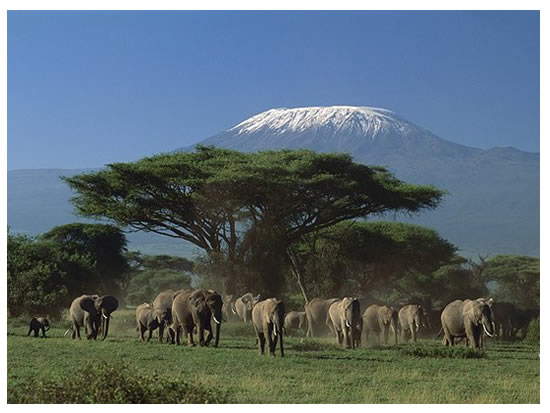 Amboseli National Park, located in southern Kenya near the Tanzania border, is one of the country’s most iconic wildlife destinations. Covering approximately 392 square kilometers, the park is set against the dramatic backdrop of Mount Kilimanjaro, Africa’s highest peak. The snow-capped mountain rising above the plains creates one of the most photographed landscapes in Africa.
Amboseli is especially famous for its large herds of free-ranging elephants, many of which have been studied for decades by conservation researchers. The park offers some of the best opportunities in Africa to observe elephants up close, including impressive tuskers. In addition to elephants, Amboseli is home to lions, cheetahs, hyenas, buffalo, giraffes, zebras, wildebeest, and a variety of antelope species.
The park’s diverse habitats include open savannah, acacia woodlands, seasonal swamps fed by underground water from Mount Kilimanjaro, and dry lake beds such as Lake Amboseli. These wetlands attract numerous animals and over 400 species of birds, including pelicans, herons, kingfishers, and birds of prey.
Amboseli also has strong cultural ties to the Maasai people, who live in the surrounding areas and maintain their traditional pastoral lifestyle. Community-based conservation initiatives help protect wildlife while supporting local livelihoods.
With its spectacular scenery, rich wildlife, and unique cultural experiences, Amboseli National Park remains one of Kenya’s most rewarding safari destinations.
Serengeti National Park
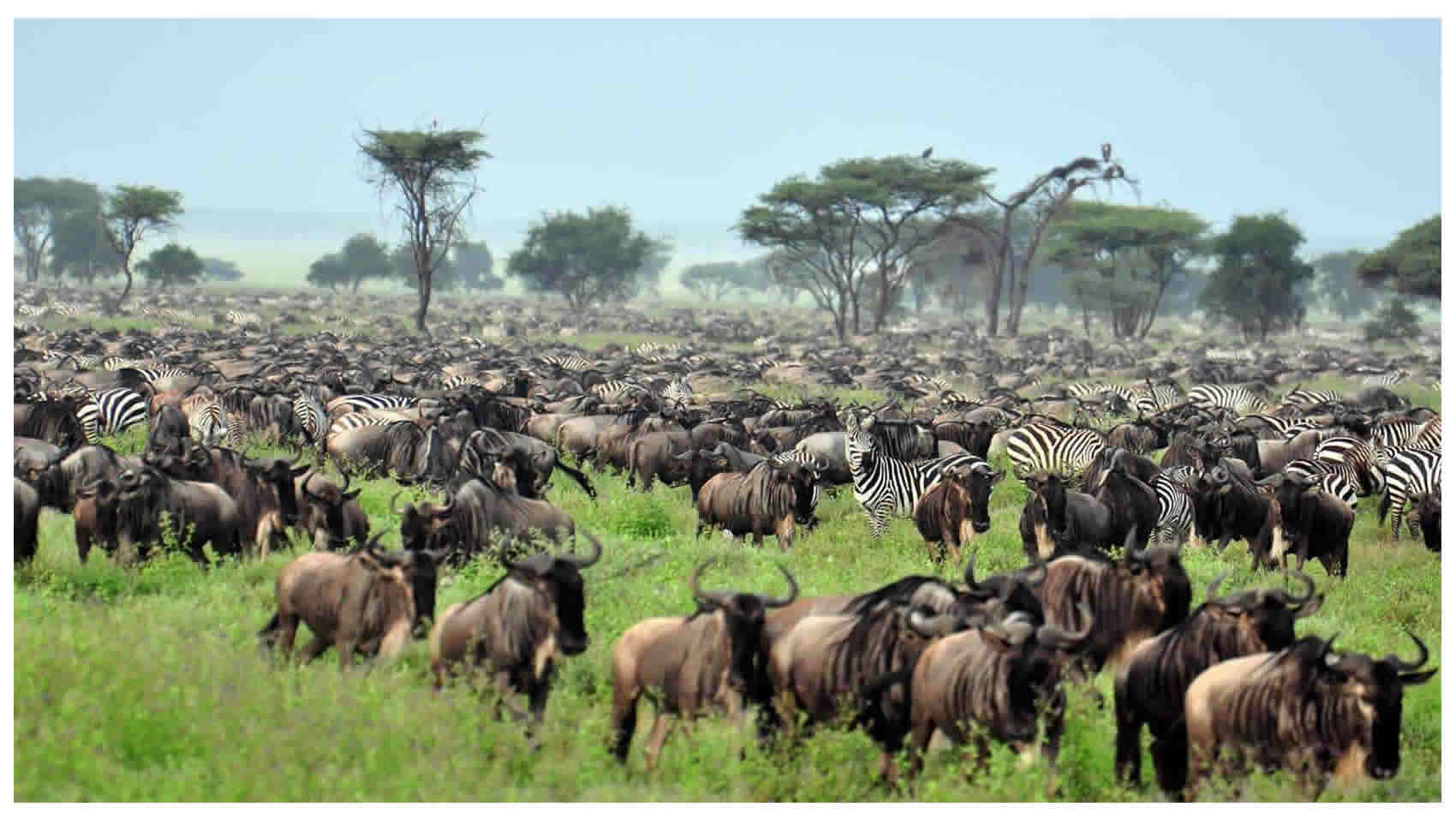 Serengeti National Park, located in northern Tanzania, is one of the world’s most famous wildlife conservation areas and a UNESCO World Heritage Site. Covering approximately 14,750 square kilometers, it forms the heart of the vast Serengeti ecosystem, which extends into Kenya’s Maasai Mara National Reserve. The park is renowned for its endless plains — the name “Serengeti” comes from the Maasai word Siringet, meaning “endless plains.”
The Serengeti is best known for the Great Migration, the largest overland wildlife migration on Earth. Each year, more than 1.5 million wildebeest, along with hundreds of thousands of zebras and gazelles, move in a continuous cycle in search of fresh grazing and water. This dramatic journey includes river crossings filled with crocodiles and intense predator-prey interactions, making it one of nature’s greatest spectacles.
The park supports an extraordinary diversity of wildlife, including the “Big Five” — lion, leopard, elephant, buffalo, and rhinoceros. It is particularly famous for its large lion population and healthy numbers of cheetahs, hyenas, and leopards. The varied habitats range from vast grasslands in the south to wooded hills, riverine forests, and rocky outcrops known as kopjes, which serve as lookout points for predators.
With its breathtaking landscapes, abundant wildlife, and world-class safari experiences, Serengeti National Park stands as one of Africa’s most iconic and important protected areas.
Ngorongoro Wildlife Sanctuary
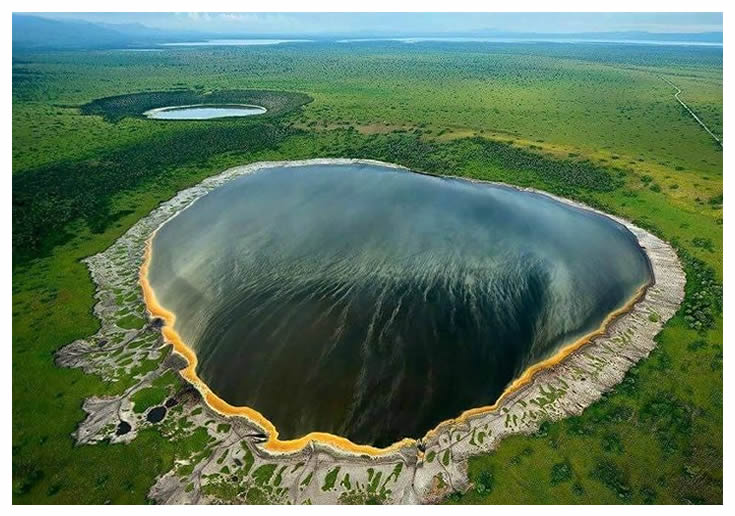 Ngorongoro Wildlife Sanctuary, commonly known as the Ngorongoro Conservation Area (NCA), is one of Tanzania’s most remarkable protected areas and a UNESCO World Heritage Site. Located west of Arusha and adjacent to Serengeti National Park, it covers approximately 8,292 square kilometers of highlands, plains, forests, and volcanic landscapes. The area is best known for the Ngorongoro Crater, the world’s largest intact and unfilled volcanic caldera, formed about two to three million years ago.
The Ngorongoro Crater spans roughly 260 square kilometers and has steep walls rising about 600 meters from the crater floor. This natural enclosure supports an extraordinary concentration of wildlife year-round due to its permanent water sources and fertile grazing lands. It is one of the best places in Africa to see the “Big Five,” including the endangered black rhinoceros. Lions, elephants, buffalo, leopards, cheetahs, hyenas, hippos, and large herds of wildebeest and zebras are commonly sighted.
The conservation area is unique because it promotes a multiple land-use model where wildlife coexists with the semi-nomadic Maasai people, who continue to graze their livestock in designated areas. This blend of conservation and traditional pastoralism makes Ngorongoro culturally as well as ecologically significant.
Beyond the crater, the sanctuary includes Olduvai Gorge, an important archaeological site where some of the earliest human fossils were discovered. With its dramatic scenery, dense wildlife populations, and rich cultural heritage, Ngorongoro remains one of Tanzania’s most extraordinary safari destinations.
Lake Nakuru National Park
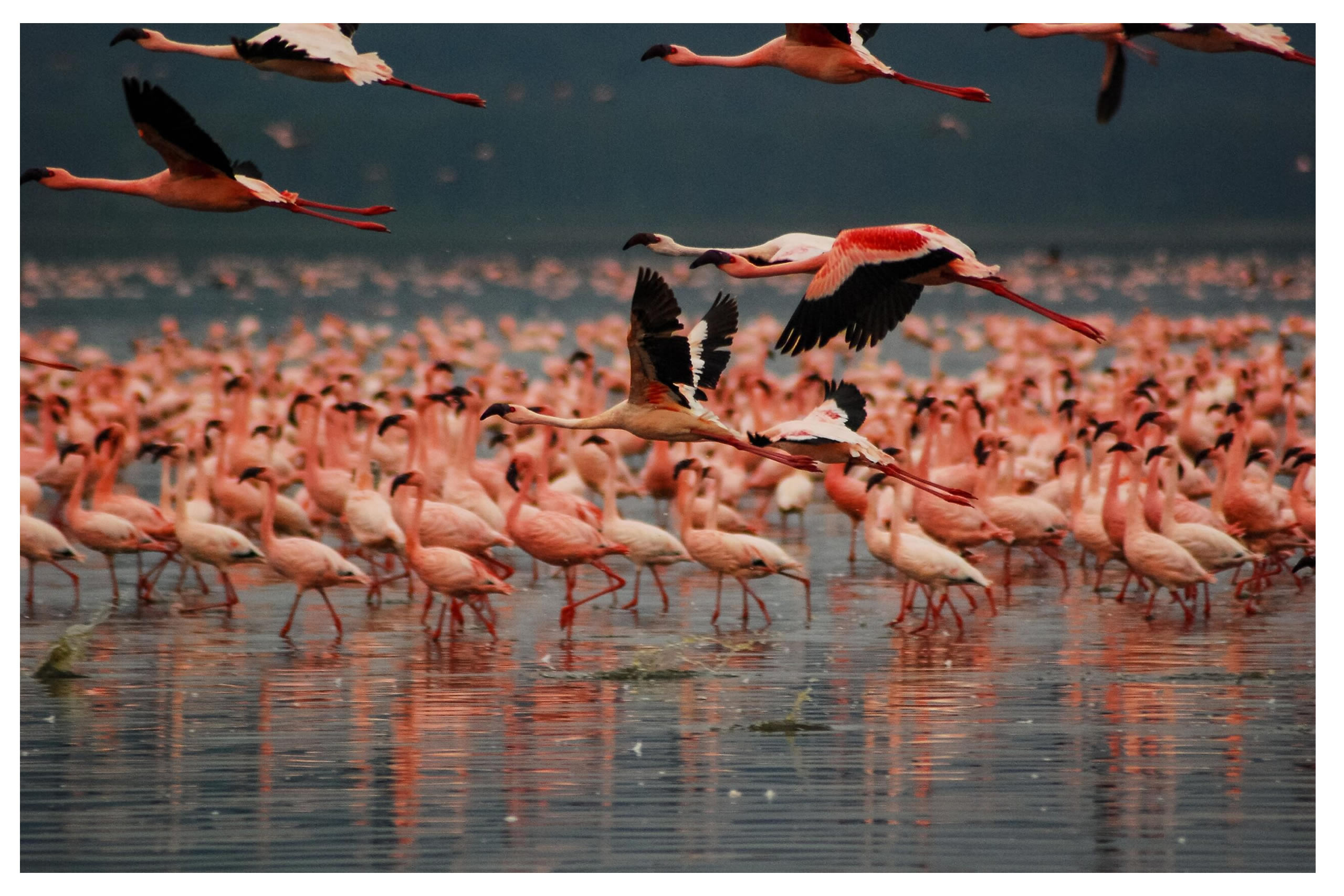 Lake Nakuru National Park is one of Kenya’s most famous and scenic wildlife destinations, located in the Great Rift Valley about 160 kilometers northwest of Nairobi. Covering approximately 188 square kilometers, the park is centered around Lake Nakuru, a shallow alkaline lake that has long been renowned for its spectacular birdlife and diverse ecosystems.
The park gained international recognition for its large flocks of flamingos, which at times have formed a shimmering pink ring along the lake’s shoreline. Although flamingo numbers fluctuate depending on water levels and food availability, Lake Nakuru remains an important feeding ground for both lesser and greater flamingos. In addition to flamingos, the park is a birdwatcher’s paradise, hosting over 400 bird species, including pelicans, cormorants, African fish eagles, and various herons.
Lake Nakuru National Park is also a key sanctuary for endangered species. It was established as a rhino sanctuary in the 1980s and now supports both black and white rhinos, offering one of the best chances in Kenya to see these threatened animals in the wild. Other wildlife commonly seen in the park includes lions, leopards, buffaloes, Rothschild’s giraffes, zebras, waterbucks, and baboons. The park’s relatively compact size and well-maintained road network make wildlife viewing accessible and rewarding.
The landscape is diverse and picturesque, featuring acacia woodlands, rocky escarpments, grasslands, and waterfalls such as Makalia Falls. Scenic viewpoints like Baboon Cliff and Lion Hill provide panoramic views of the lake and surrounding Rift Valley terrain.
With its rich biodiversity, conservation significance, and dramatic scenery, Lake Nakuru National Park stands out as a premier safari destination in Kenya, offering visitors a memorable blend of wildlife encounters and natural beauty.
Aberdares National Park
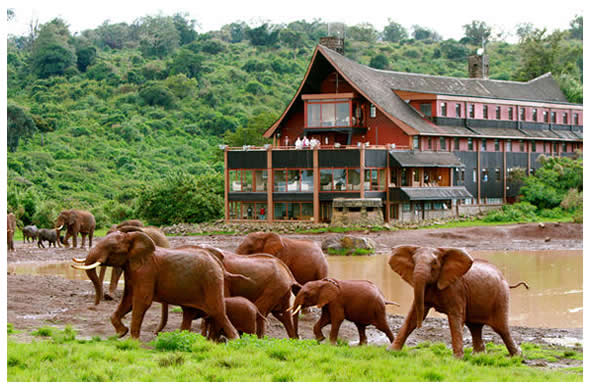 Aberdare National Park is a spectacular highland protected area located in central Kenya, about 100 kilometers north of Nairobi. Established in 1950, the park covers approximately 766 square kilometers and forms part of the Aberdare Mountain Range, which rises to peaks above 4,000 meters, including Ol Doinyo Lesatima (4,001 m) and Kinangop (3,906 m). The park is known for its cool climate, mist-covered forests, dramatic waterfalls, and rugged landscapes.
Unlike the open savannah parks of Kenya, the Aberdares are characterized by dense bamboo forests, montane rainforests, moorlands, and deep ravines. The park’s diverse habitats support a wide range of wildlife. It is home to elephants, buffaloes, black rhinos, leopards, spotted hyenas, and olive baboons. Rare and elusive species such as the bongo antelope—an endangered forest antelope—also inhabit the park. The Aberdares are one of the few places in Kenya where visitors may spot the giant forest hog.
The park is especially famous for its unique tree lodges, including The Ark and Treetops Lodge, where guests can observe wildlife as it visits floodlit waterholes and salt licks. Treetops Lodge is historically significant, as it was here in 1952 that Princess Elizabeth learned of her father’s death and became Queen Elizabeth II.
In addition to wildlife viewing, Aberdare National Park offers excellent hiking opportunities, scenic drives, trout fishing in mountain streams, and visits to impressive waterfalls such as Karuru Falls and Gura Falls. The park also plays a vital ecological role as a major water catchment area, supplying water to much of central Kenya.
With its dramatic scenery, rich biodiversity, and cool mountain atmosphere, Aberdare National Park offers a distinctive and refreshing safari experience.
You’re now using our basic model.
Bird viewing is rewarding, with over 250 species of birds in the park, including the Jackson’s Francolin, sparry hawk, goshawks, eagles, sunbirds and plovers.
Mt. Kenya National Park
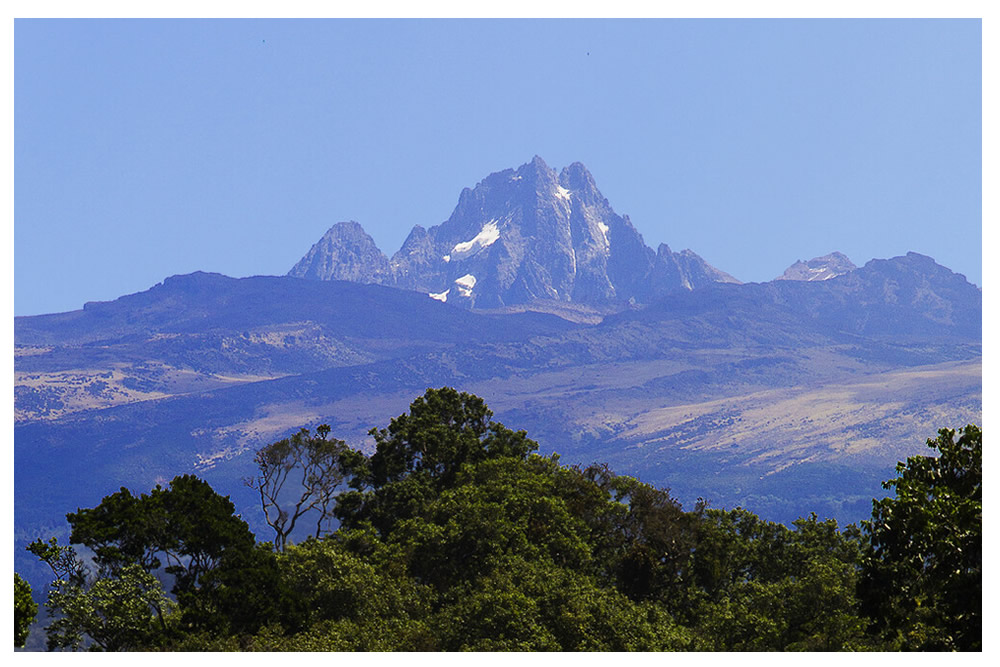 Mount Kenya National Park is a UNESCO World Heritage Site and one of Kenya’s most iconic natural landmarks. Established in 1949, the park covers roughly 715 square kilometers and encompasses the central massif of Mount Kenya, the second-highest peak in Africa at 5,199 meters. The park is located in central Kenya, straddling Meru, Nyeri, and Laikipia counties, and is celebrated for its dramatic landscapes, glacial peaks, alpine moorlands, and diverse ecosystems.
The park’s varied habitats support an impressive range of wildlife. Lower forested slopes are home to elephants, buffalos, bushbucks, leopards, and monkeys, while the alpine zones host unique species adapted to colder conditions, such as hyraxes and several endemic plants. Mount Kenya is also a birdwatcher’s haven, with species including the Hartlaub’s turaco, Jackson’s francolin, and numerous sunbirds. Endangered species such as the mountain bongo and black rhino find refuge within the park.
Mount Kenya National Park offers exceptional opportunities for adventure and eco-tourism. Hiking and climbing are major attractions, with routes like Sirimon, Naro Moru, and Chogoria providing access to glaciers, volcanic peaks, and stunning valleys. The park also features scenic lakes such as Lake Michaelson and Lake Ellis, formed from glacial activity, and unique features like the Elephant’s Trunk and Point Lenana.
Besides its ecological significance, Mount Kenya is culturally important, considered sacred by the Kikuyu people, who traditionally regard it as the home of their god, Ngai. The park also plays a crucial role in water catchment, feeding rivers such as the Tana, which support agriculture and hydroelectric power downstream.
With its towering peaks, rich biodiversity, and cultural significance, Mount Kenya National Park offers a remarkable combination of natural beauty and adventure, making it one of Kenya’s premier destinations for both wildlife enthusiasts and mountaineers.
Savora Salt Lick Game Lodge
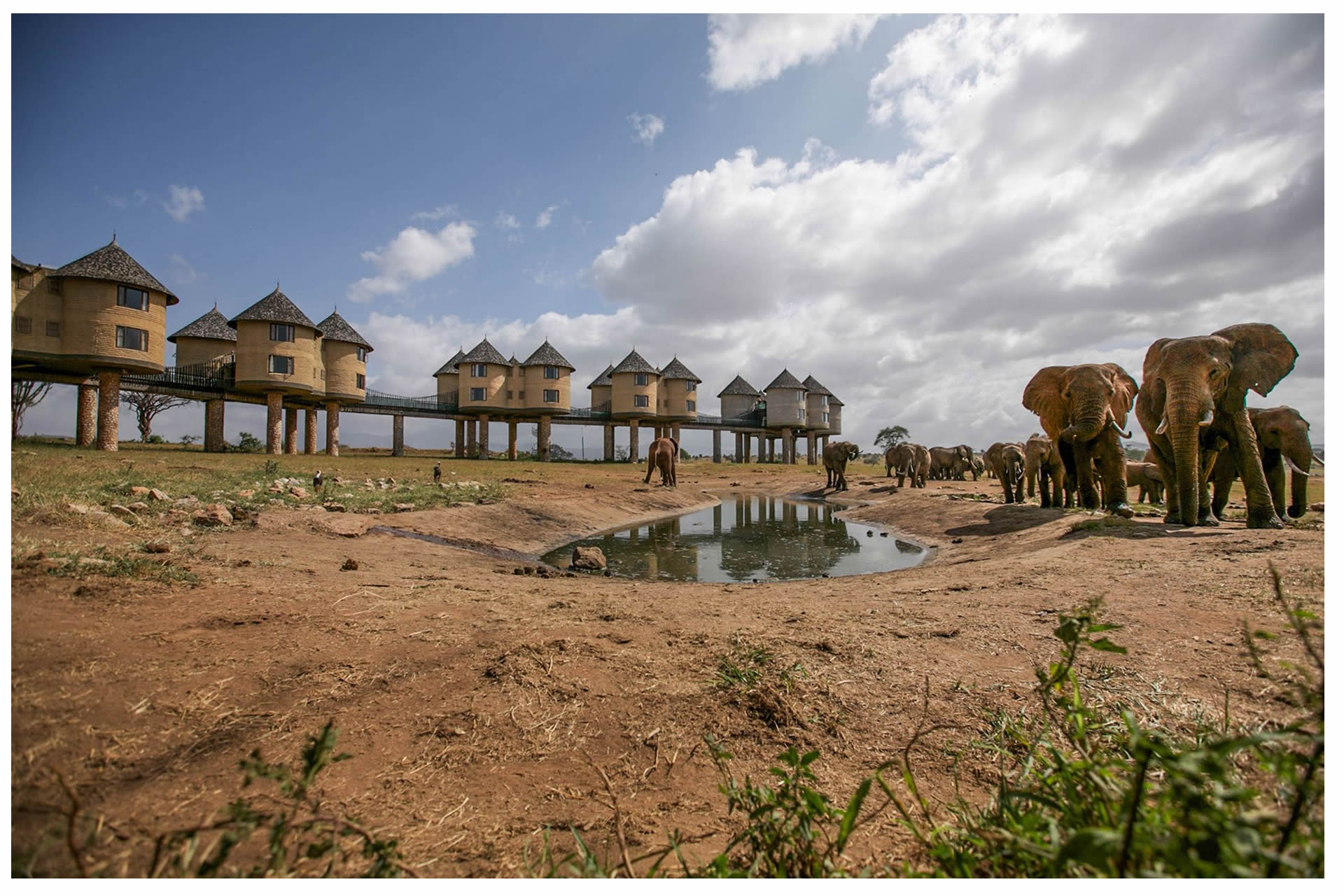 Sarova Salt Lick Game Lodge offers an unparalleled safari experience. The entire lodge is raised on high stilts above watering holes and feeding pastures offering a spectacular view of the wildlife from above and all around. The Lodge is situated in the midst of the Taita Hills Sanctuary, a private wildlife conservancy of 28.000 acres at the foot of the Taita Hills bordering Tsavo West National Park, one of the world’s largest game reserves. The Sarova Salt Lick Game Lodge offers luxury accommodation and facilities and is the perfect place in an unforgettable setting to explore the natural environment around.
The Sanctuary provides a safe environment to over 50 species of mammals and 300 species of birds within 28.000 acres of rolling savanna and woodland habitats. Large numbers of wildlife come to drink at the waterholes, so Sarova Salt Lick Game Lodge provides a rare opportunity to view animals at close proximity in their natural habitat. The lobby, restaurant and terraced bar all provide excellent views and photographic opportunities, while an underground tunnel and bunker with ground level windows provides unbelievably close yet safe access to a variety of wildlife as they drink. The waterholes are illuminated by powerful floodlights as it gets dark, to make sure that you witness all the activity throughout the night.
The Sanctuary is a success story in sustainable conservation where wildlife – including elephant, lion, buffalo and giraffe – thrive. Game drives are tightly controlled to ensure that animals are not harassed and some areas are completely closed to vehicles. This commitment to responsible ecotourism, which has been so well supported by visitors, ensures that the Sanctuary and all its wildlife will continue to prosper.


